Is Beef Gelatin Halal? Bovine vs Halal Certified Gelatin
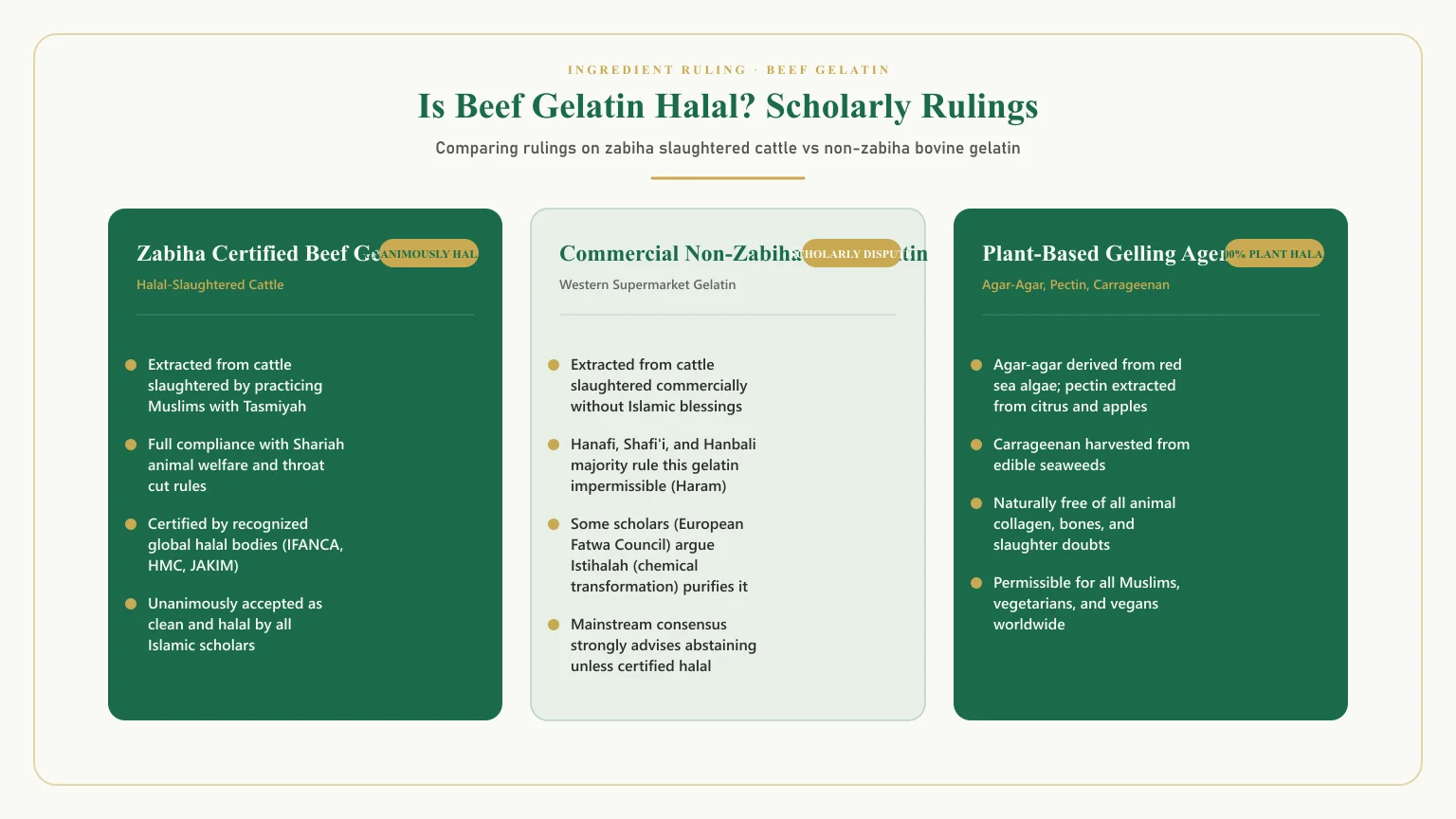
Beef gelatin is halal only if it comes from cattle slaughtered the Islamic way. The word 'beef' or 'bovine' tells you the animal, not the slaughter method, and most beef gelatin in Western markets comes from cattle that weren't halal slaughtered. Look for a halal certificate, or choose fish or plant based alternatives.
ℹ️ Halal with ConditionsIn this guide9 sections
Beef gelatin is halal only if it comes from cattle slaughtered the Islamic way. That’s the short answer, and it catches many people out. Seeing “beef gelatin” or “bovine gelatin” on a label tells you the animal, but it doesn’t tell you how the animal was slaughtered. Most beef gelatin in Western markets comes from ordinary slaughterhouses, so it isn’t halal for most scholars unless it has a halal certificate.
This guide explains how beef gelatin is made, why the slaughter matters, where scholars differ, and how to find gelatin you can trust. For gelatin in general, including pork and fish gelatin, see our main guide to is gelatin halal.
Quick answer
| Label says | Halal? |
|---|---|
| Halal certified beef gelatin | Halal |
| Beef gelatin or bovine gelatin, no certificate | Not halal for most scholars |
| Kosher beef gelatin | Not automatically halal |
| Gelatin or E441, source not named | Unknown. Could be pork. Ask or avoid |
| Fish gelatin | Halal |
| Pork gelatin | Haram |
| Agar, pectin, carrageenan (plant gels) | Halal |
What beef gelatin is and how it’s made
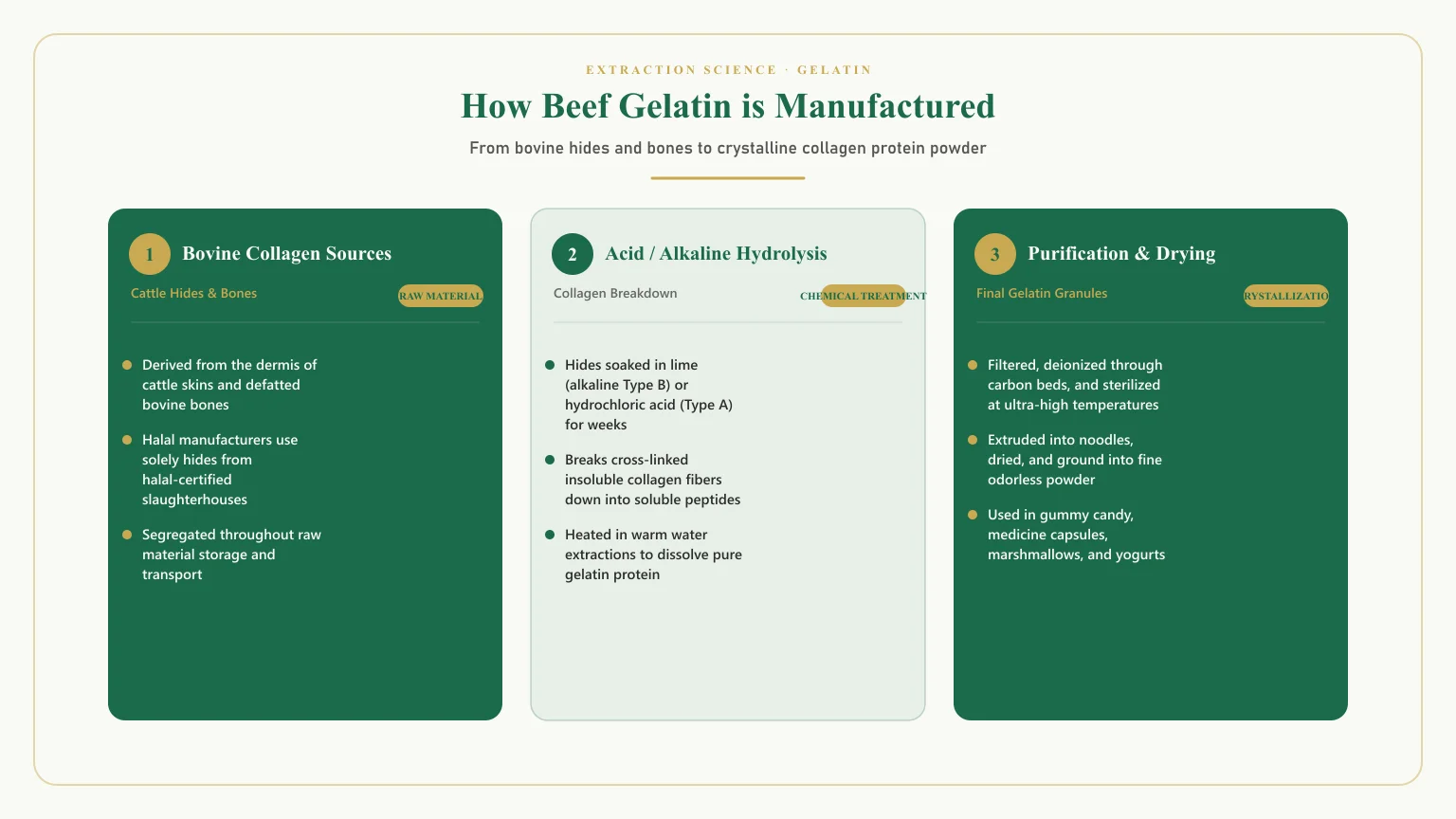
Gelatin is a protein made from collagen, the connective tissue in skin, bones and cartilage. According to the Gelatine Manufacturers of Europe, it’s produced by treating animal raw materials with acid or alkali, then extracting the collagen with hot water, filtering, concentrating and drying it into powder or sheets.
Beef gelatin (bovine gelatin) is made from cattle hides and bones, usually by-products from slaughterhouses. That’s the key point. The hides and bones come from whatever slaughterhouse the cattle went through. If those cattle weren’t halal slaughtered, neither is the gelatin.
Beef gelatin is used in:
- Gummy sweets, marshmallows and jelly
- Yoghurts, mousses and desserts
- Medicine capsules and vitamins
- Some cake decorations, glazes and cheesecakes
Why the slaughter matters
Allah forbids carrion and animals killed without proper slaughter (Surah Al-Ma’idah 5:3). The Prophet (peace be upon him) said:
“if the killing tool causes blood to gush out, and if Allah’s Name is mentioned, eat (of the slaughtered animal).” (Sahih al-Bukhari 5503)
Scholars apply the same rule to gelatin as to meat: gelatin takes the ruling of the animal it came from. Cattle slaughtered by the Islamic method give halal gelatin. Cattle slaughtered any other way, including stunned and killed without Allah’s name in a conventional plant, give gelatin that most scholars don’t accept.
Where scholars differ
The transformation argument (istihalah)
Some scholars argue that making gelatin changes collagen so thoroughly that it becomes a new, pure substance, the way wine becomes vinegar. The Islamic Organization for Medical Sciences held this view.
Most scholars reject it for gelatin. The Islamic Fiqh Council in Jeddah and the major halal certifiers, including the American Halal Foundation, don’t accept istihalah for gelatin. Dr Wafeeq ash-Sharqawi argued that the change is only partial, because modern lab tests can still identify which animal the gelatin came from.
That same test is why certifiers can check whether a product’s gelatin is really beef or pork. See our full discussion in is gelatin halal.
The People of the Book argument
Some scholars who accept meat slaughtered by Christians and Jews, based on Quran 5:5 (“the food of the People of the Book is permissible for you”), take a softer view of beef gelatin from Christian or Jewish countries. Sheikh Yusuf al-Qaradawi was among those with a broad view of that verse. The major halal certifiers don’t follow it for gelatin, and most Muslims in the West choose certified gelatin.
Where the schools stand
| School | Beef gelatin |
|---|---|
| Hanafi | Most contemporary muftis: halal only from zabiha cattle |
| Shafi’i | Halal only from properly slaughtered cattle |
| Maliki | Halal from properly slaughtered cattle; some accept istihalah more broadly |
| Hanbali | Halal only from properly slaughtered cattle |
| Ja’fari (Shia) | Permissible only from Islamically slaughtered animals, proven istihalah, or medical necessity |
Is kosher beef gelatin halal?
Not automatically. Kosher certification is a Jewish religious standard, and some kosher authorities don’t require gelatin to come from kosher slaughtered animals, because they treat processed gelatin differently. So a kosher mark on beef gelatin doesn’t prove the cattle were slaughtered in a way halal certifiers accept. Look for a halal certificate instead.
Beef gelatin in sweets and medicine
Sweets. Many gummy sweets use beef gelatin in some countries and pork gelatin in others. The same brand can differ by factory.
For example, HARIBO sells halal certified sweets made with beef gelatin in some markets, while its standard sweets in other countries use pork gelatin. Always check the pack for a halal logo from a recognised certifier. See our guides to Skittles and Sour Patch.
Medicine and vitamins. Capsules are often made from uncertified bovine or pork gelatin. Ask your pharmacist for:
- a vegetarian capsule (usually HPMC, a plant cellulose),
- a tablet or liquid version, or
- a halal certified brand.
If there’s no alternative and the medicine is needed, most scholars allow it under necessity.
How to find halal beef gelatin
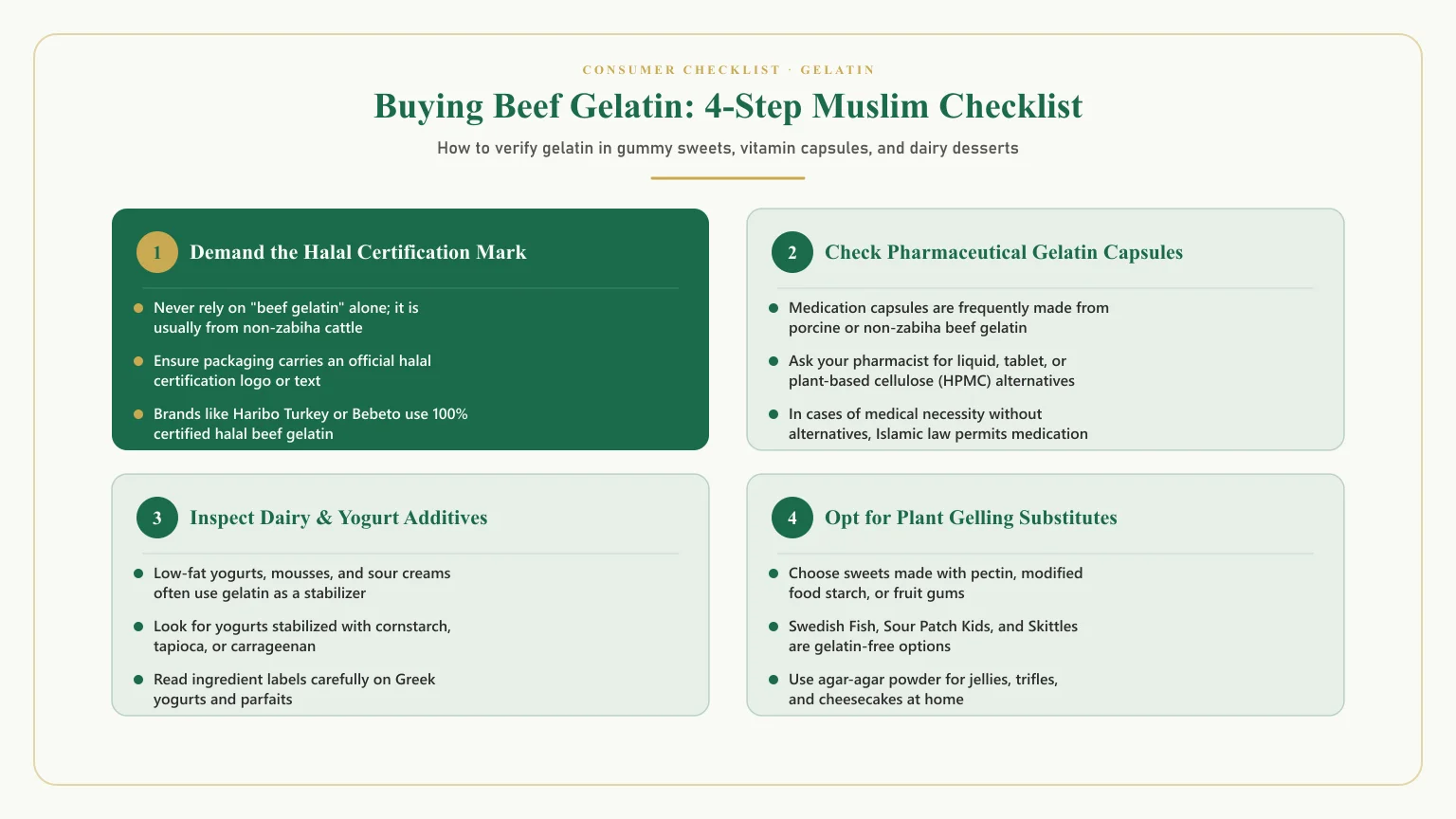
- Look for a halal logo from a certifier you recognise, such as HFA or HMC in the UK, IFANCA in the US, JAKIM in Malaysia or MUI in Indonesia.
- Read the source. “Beef” or “bovine” alone isn’t enough. It needs certification.
- Treat plain “gelatin” or “E441” as unknown. It could be pork. Ask the manufacturer or avoid it.
- Choose alternatives when you can: fish gelatin, agar, pectin or carrageenan.
The Prophet (peace be upon him) said, “whoever saves himself from these suspicious things saves his religion and his honor” (Sahih al-Bukhari 52). Uncertified beef gelatin is a textbook doubtful matter, and certified alternatives are easy to find.
Final thoughts
Beef gelatin is halal only when it comes from cattle slaughtered the Islamic way. The label “beef” or “bovine” doesn’t tell you that, and most beef gelatin in the West comes from conventional slaughter. Most scholars and certifiers don’t accept transformation (istihalah) for gelatin, and a kosher mark isn’t the same as halal. Look for a halal certificate, or choose fish gelatin or plant gels.
If a brand tells you where its gelatin comes from, share it through our Contact page and we’ll update our guides.
Frequently Asked Questions
Sources & references8
We checked every claim in this guide against these sources.
- - title: "Quran 5:3 (carrion and improperly killed animals forbidden)"quran.com
- Quran 5:5 (food of the People of the Book)quran.com
- Sahih al-Bukhari 5503 (blood flowing, Allah's name mentioned)sunnah.com
- Sahih al-Bukhari 52 (doubtful matters)sunnah.com
- Gelatine Manufacturers of Europe: Manufacturing of gelatinegelatine.org
- American Halal Foundation: Is gelatin halal?halalfoundation.org
- HARIBO USA: FAQharibo.com
- IslamQA 219137: Is gelatin halal?islamqa.info